
Coach Nick, CSCS, MPC
Rest is not the absence of work, but a skill you practice on purpose so the training you do turns into growth.
Think about how much your athlete has done this week. Did they make it to practice every day and stay for three hours? Did they take extra reps after practice to work on what they are struggling with? Did you talk to them about discipline and grinding at school, at practice, in games, and at home?
All of that can help development, up to a point. But have you had an honest conversation about rest, and what it does for your athlete psychologically, physically, and emotionally?
The Myth: Rest Looks Like Weakness
Parents and coaches are always looking for the next thing that will make an athlete better. If you are not checking every box, it can feel like you are wasting their development. Athletes hear “no days off” from coaches, teammates, social feeds, influencers, and nearly everyone else in their lives.
This grind culture rewards only effort that can be seen. But the effort you can see is not the same as progress you can use.
Rest Is Where Growth Happens
Kinetic Growth means adapting continuously. Adaptation does not happen during the session. It happens afterward, while the body and mind recover.
Skipping rest has real costs. Fatigue accumulates, and overuse injuries become more likely. Sleep often slips, and memory, reaction time, mood, and motivation suffer. Chronic stress builds up, narrows focus, shortens patience, and makes mistakes more likely. The athlete who never rests is set up for diminished performance.
Planned Rest vs. Avoidance
Rest can be a tool or a hiding place. The difference is intent.
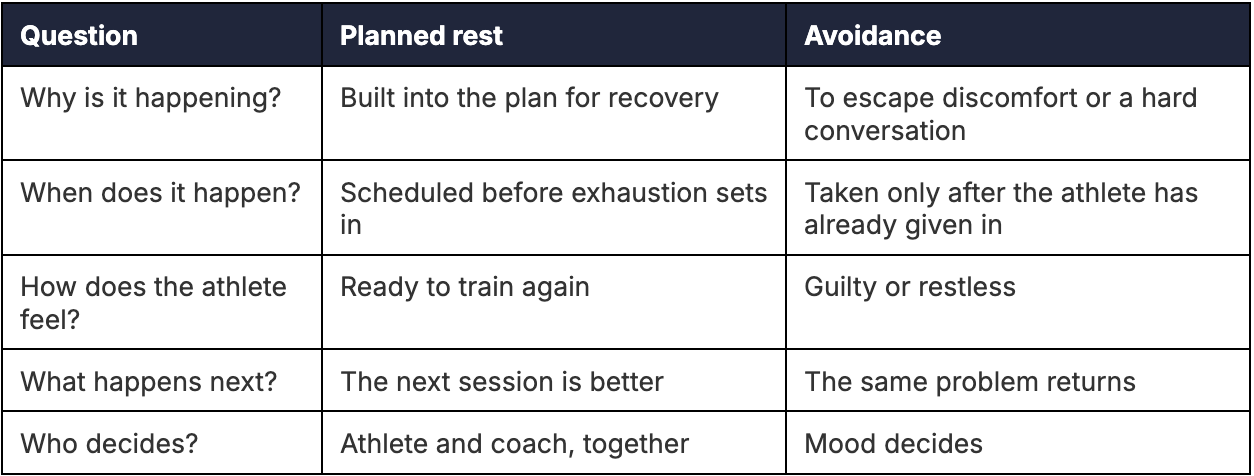
Discipline means rest is scheduled and used on purpose, not taken when burnout occurs.
Questions to Ask Yourself
Is my athlete’s rest planned, or only taken once they are already burned out?
Am I measuring hours and effort, or readiness and recovery?
Do I talk about rest as part of the strategy, or only as a reward for good work?
What does my schedule say about rest, even when I say it matters?
Action Steps for This Week
Schedule one full rest day and put it on the calendar before the week starts.
Set a sleep target for the night before big sessions, and keep screens out of the bedroom for the last hour.
Use a 1 to 10 readiness check before training. Adjust the session when the score is low.
Plan a deload week every 4 to 6 weeks during the season.
Say rest out loud: “Rest is part of the plan.”
Call to Action
Rest is a skill you train for. If you want help building recovery into your athlete’s plan, book a parent session with us: Book a Session